
For many Canadian homeowners, discovering a crack in the basement wall is a rite of passage. In a climate where the ground spends half the year frozen solid and the other half saturated with snowmelt, concrete is under constant duress. However, the challenge lies in distinguishing a benign “settlement crack” from a structural failure that threatens the safety of your family and the value of your property.
Ignoring a structural red flag can lead to catastrophic collapses or uncontrollable flooding, especially during the volatile “freeze-thaw” cycles common in provinces like Ontario and Alberta. Knowing when to call a structural engineer versus a standard repair contractor is the difference between a simple patch and a six-figure excavation. When the integrity of your home’s “bones” is at stake, timing is everything.
Horizontal Cracking and Inward Bowing
While vertical cracks are often the result of the concrete drying out or minor settling, horizontal cracks are a major red flag. These typically indicate that the soil outside—often heavy, wet Canadian clay—is pushing against the wall with more force than the structure can handle.
- Hydrostatic Pressure: Excessive water buildup in the soil creates a “bulge” effect, forcing the middle of the wall inward.
- Structural Instability: A horizontal break means the wall is no longer a single solid unit, compromising its ability to support the weight of the house above.
- Frost Heave Impact: In colder regions, the lateral pressure from frozen soil can accelerate this inward movement rapidly over a single winter.
If you place a level against your wall and notice a significant gap or a visible “lip” where one side of the crack sticks out further than the other, you are facing a structural emergency. This requires immediate stabilization, often using carbon fibre straps or steel beams, to prevent a total wall failure.
The “Stair-Step” Pattern in Brick or Block
For homes with cinder block or brick foundations, a crack that follows the mortar lines in a diagonal, stair-step pattern is a sign of localized settlement. This suggests that one corner or section of your home’s footing is sinking faster than the rest of the structure.
- Footing Failure: This often means the ground beneath the concrete footing has washed away or compacted unevenly.
- Differential Settlement: When parts of the house move at different speeds, it creates immense shearing stress that can snap mortar joints.
- Exterior Progression: These cracks often start in the basement and migrate upward into the exterior brickwork or siding.
A stair-step crack wider than 1/4 inch (about the width of a pencil) is a signal that your home’s foundation is no longer level. If left unaddressed, this movement can cause windows to shatter, doors to jam, and eventually lead to a partial collapse of the supported floor joists.
Active Water Gushing During the Thaw
In Canada, a dry crack is a concern, but a “weeping” crack is an urgent problem. If water is actively flowing, spraying, or bubbling through a foundation wall during a heavy rainstorm or the spring melt, the situation has escalated to an emergency.
- Erosion Risk: Flowing water carries silt and soil with it, meaning the ground supporting your foundation is literally being washed away from the outside.
- Electrical Hazards: Basements house electrical panels and appliances; active flooding creates a significant risk of fire or electrocution.
- Rapid Mould Colonization: Saturated drywall and insulation can begin growing toxic mould in as little as 24 to 48 hours.
Water ingress of this magnitude suggests that your exterior waterproofing or weeping tiles have completely failed. Emergency internal injections can provide a temporary plug, but you will likely need a professional to address the exterior drainage to prevent your basement from becoming a permanent pond.
Convergence of Interior and Exterior Symptoms
A foundation crack is rarely an isolated incident; it usually acts as the “ground zero” for symptoms throughout the rest of the house. When you see a basement crack paired with interior structural shifts, the building’s skeletal integrity is being compromised.
- Binding Doors and Windows: If you suddenly cannot lock your front door or open a bedroom window, the frame has likely been pulled out of square by a shifting foundation.
- Drywall Fissures: Large cracks appearing above door frames or at the corners of ceilings on the main floor are “telegraphing” movements from the basement.
- Sloping Floors: If a ball rolls across your hardwood floor on its own, your foundation has tipped significantly enough to affect the home’s level.
These “secondary” symptoms indicate that the foundation crack is not just a surface blemish but a sign that the entire structure is twisting. This level of movement requires an immediate assessment by a structural engineer to determine if the home is still safe for occupancy.
Wide Gaps and Visible Daylight
It may sound obvious, but any crack that allows you to see through to the soil on the other side or lets in visible daylight is an extreme emergency. These wide gaps (usually over 1/2 inch) indicate that the concrete has moved beyond the point of simple thermal expansion.
- Pest Infestation: Large gaps are open highways for rodents, termites, and carpenter ants to enter your home’s structure.
- Heat Loss: In a Canadian winter, a gap this size acts like an open window, skyrocketing your heating bills and risking frozen pipes near the rim joists.
- Soil Intrusion: Over time, dirt and debris will fill the crack, making it impossible for the foundation to ever “settle back” into its original position without professional lifting.
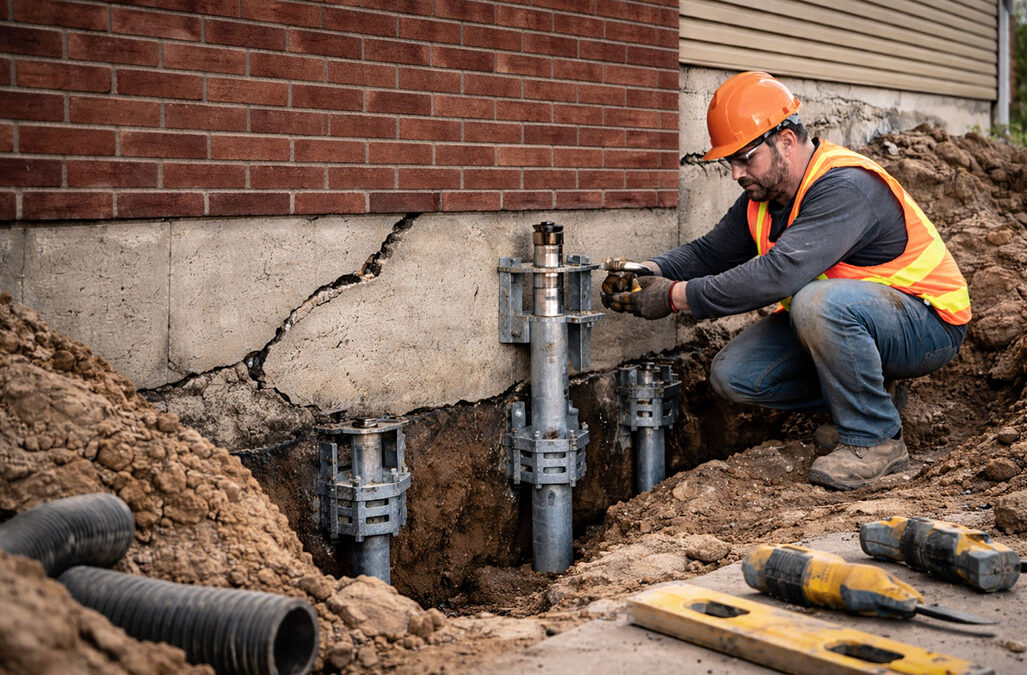
A gap of this magnitude suggests that the reinforcing steel inside the concrete (rebar) may have snapped or corroded away. There is no DIY fix for a gap this large; it requires professional mechanical “piering” or underpinning to stabilize the home’s footprint.
Protect Your Investment Before the Crack Widens
In the world of homeownership, “waiting and seeing” is the most expensive strategy you can employ regarding your foundation. While a tiny hairline crack might just be a sign of a house “finding its seat,” the red flags mentioned above—horizontal shifts, active leaks, and jammed doors—are clear calls for professional intervention.
By addressing these emergencies early, you save your home from permanent structural damage and ensure that your biggest financial asset remains on solid ground.