
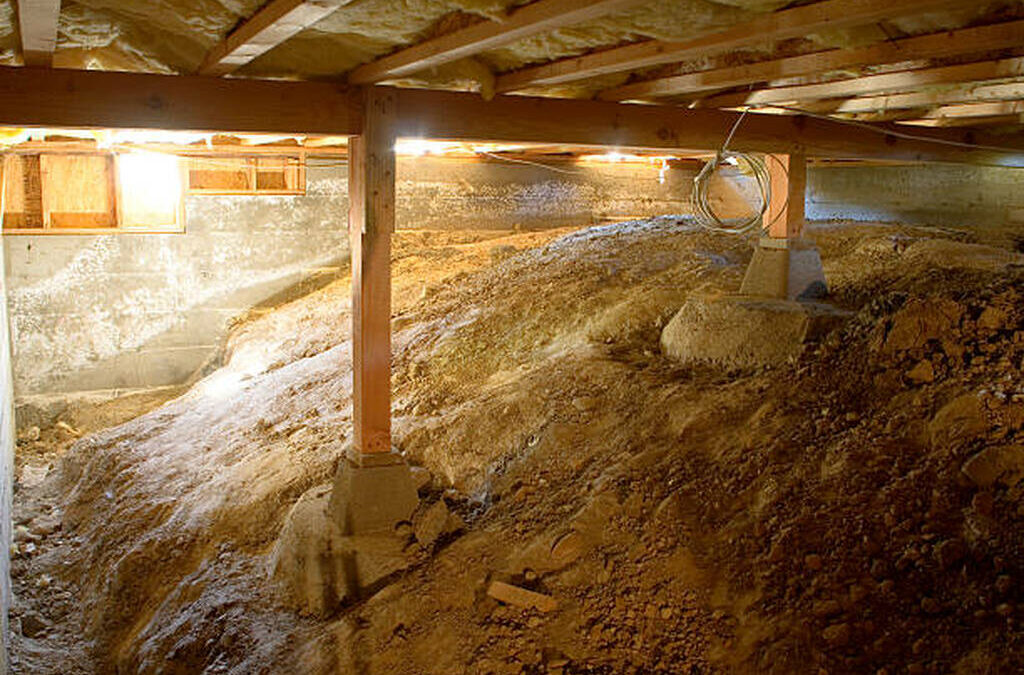
Many older homes across Ontario, from the cottage country of Muskoka to the suburban streets of Hamilton, were built on crawlspaces rather than full foundations. As these homes age, owners often face a pivotal decision: should they simply repair the existing crawlspace to keep it dry and stable, or invest in a full basement conversion (often called “digging out” a basement)? Both options address structural health, but they serve very different goals and come with vastly different price tags.
Understanding the distinction is vital for long-term planning. While a repair focuses on preservation and moisture control, a conversion is a massive engineering feat that transforms a dark, cramped utility area into a functional, value-adding living space. Deciding which path is right for your property depends on your budget, your structural needs, and your long-term plans for the home.
The Scope of Work: Maintenance vs. Transformation
Crawlspace repair is generally a “rehab” of the existing environment to stop deterioration. In contrast, a full basement conversion involves a complete structural overhaul that changes the very footprint of your home’s lower level.
- Repair Focus: Tasks include installing a vapour barrier (encapsulation), replacing rotted support jacks, and fixing minor foundation cracks.
- Conversion Focus: This involves excavating tons of earth from beneath the existing house, often while the house is supported on temporary steel beams.
- Structural Impact: Repairs reinforce what is already there, whereas a conversion requires “underpinning”—extending the foundation walls deeper into the ground to create a 7-foot or 8-foot ceiling height.
Repair is about stabilization and keeping the “status quo” healthy. Conversion is a major construction project that effectively gives your home an entirely new floor.
Moisture Management and Waterproofing
Both methods prioritize a dry environment, but the techniques used to achieve this vary based on the depth of the foundation. Ontario’s high water table makes drainage a top priority for both crawlspaces and deep basements.
- Crawlspace Solutions: Typically involves a 6-mil or 20-mil polyethylene liner to block ground moisture and a specialized crawlspace dehumidifier.
- Basement Solutions: Requires a comprehensive weeping tile system, a robust sump pump, and often exterior waterproof membranes to handle the increased hydrostatic pressure at greater depths.
- Frost Line Concerns: In Canada, we must ensure all footings remain below the frost line; a conversion ensures this by default, while repairs often involve adding insulation to prevent frost heave.
Properly managing moisture in a crawlspace protects your floor joists from rot. In a full basement, it protects your drywall, flooring, and furniture from the devastating effects of a flood.
Investment and Return on Value
The financial gap between these two options is significant. Homeowners must weigh the immediate cost against the potential increase in the “resale value” of their property in the competitive Ontario real estate market.
- Cost Comparison: Crawlspace repairs might cost a few thousand dollars, whereas a full basement dig-out can easily exceed $50,000 to $100,000, depending on the size of the home.
- Square Footage: A conversion can nearly double the usable square footage of a small bungalow, which is a massive selling point in high-density areas like Toronto or Ottawa.
- Insurance Benefits: Repairing a damp crawlspace can lower your insurance risk by preventing mould, but a finished basement requires a different type of coverage for the new living area.
If you plan on staying in your home for decades or need more room for a growing family, a conversion is an investment. If you are looking to protect the structure with minimal spending, repair is the logical choice.
Construction Timelines and Household Disruption
Because a conversion is so invasive, it significantly impacts your daily life. Repairing a crawlspace is a much quieter, faster process that usually happens entirely out of sight.
- Repair Timeline: Most crawlspace encapsulations or structural jack replacements are completed within 2 to 4 days.
- Conversion Timeline: Digging out and underpinning a basement is a multi-week or even multi-month process involving heavy machinery and structural inspections.
- Occupancy: You can almost always stay in your home during crawlspace repairs, but a conversion may require you to vacate temporarily due to noise, dust, or utility shut-offs.
Homeowners should consider their tolerance for construction chaos. If you work from home, the jackhammers and dirt conveyors required for a conversion will be a major distraction.
Energy Efficiency and Home Comfort
Both options will make your home more comfortable, but they do so in different ways. A damp crawlspace is a major source of “cold floors,” while a full basement offers a whole new conditioned zone for the home.
- The Stack Effect: Sealing a crawlspace stops cold air from being pulled up into your living room, lowering your heating bills during an Ontario winter.
- Living Comfort: A converted basement provides a thermally stable environment that stays cool in the summer and warm in the winter.
- HVAC Integration: Conversions usually involve extending ductwork and plumbing, whereas crawlspace repairs focus on insulating the “envelope” to prevent heat loss.
Regardless of the choice, removing moisture from the base of your home makes the entire building easier to heat. You’ll notice fewer drafts and a more consistent temperature throughout the house.
Build Your Future on a Solid Foundation
Deciding between a crawlspace repair and a basement conversion comes down to one question: do you just need a dry house, or do you need more room to live? For many, the simplicity and affordability of a professional crawlspace repair are enough to secure the home’s structural future and air quality.
However, if your goal is to maximize your property’s potential and add significant market value, the “big dig” of a conversion is a transformative journey worth taking. Whichever you choose, addressing your foundation today ensures your Ontario home remains a safe, dry sanctuary for years to come.