
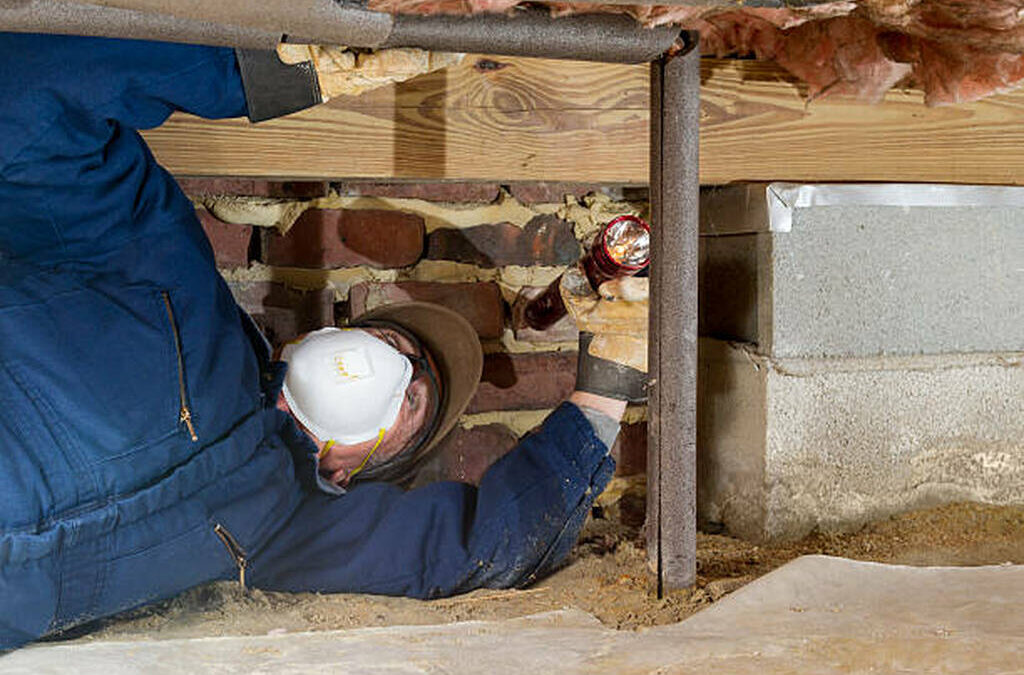
In many parts of Ontario, especially in older lakeside cottages or rural homes in the Muskokas and the GTA, houses are built over crawlspaces rather than full basements. While this “space” might seem like an afterthought, it actually houses the critical structural skeleton of your home, including the wooden floor joists, sills, and support beams. When this area becomes damp, it stops being a simple storage space and turns into a breeding ground for wood-decaying fungi.
Because crawlspaces are often dark, cramped, and rarely visited, moisture issues can go unnoticed for years. In our Canadian climate, the combination of high summer humidity and cold, wet winters creates a “micro-climate” under your house that is often saturated with vapour. If you ignore a damp crawlspace, you aren’t just dealing with a musty smell; you are allowing the very wood holding your house up to slowly dissolve.
High Humidity and the Dew Point Effect
Ontario summers are notoriously humid, and when that warm, moist air enters a cool crawlspace through vents, it reaches its “dew point.” This causes the air to release its moisture as liquid condensation, which then clings to the wooden structure above.
- Condensation Cycles: Droplets of water form on cold pipes and wooden beams, much like a cold pop can on a hot July day.
- Fibre Saturation: Once the moisture content in the wood exceeds 19% to 20%, the cellular structure of the lumber begins to soften.
- Poor Ventilation: Old-fashioned vents often do more harm than good by letting in humid air rather than “drying out” the space as originally intended.
This constant wetting and drying cycle stresses the wood grain, causing it to warp and crack. Over time, this moisture creates the perfect environment for the biological processes that lead to rot.
The Rise of Wood-Decaying Fungi
Rot isn’t just “wet wood”; it is a living fungus that literally eats the cellulose and lignin that give wood its strength. These fungi thrive in the stagnant, damp environments found in unconditioned Ontario crawlspaces.
- White Rot and Brown Rot: These fungi break down different parts of the wood, either making it look “stringy” or causing it to crumble into small cubes.
- Spore Distribution: Once a colony is established, it releases millions of spores that can travel through your floorboards and into your living air.
- Mycelium Growth: Fungi can grow “roots” called mycelium that travel across concrete footings to reach new, dry wood sources.
As the fungi consume the wood, the structural integrity of your beams vanishes. What once was a solid support becomes a soft, cork-like material that can be easily poked through with a screwdriver.
Termites and Carpenter Ants Love Damp Wood
In Southern Ontario, damp wood is a beacon for wood-destroying insects like Eastern Subterranean Termites and carpenter ants. These pests don’t just happen upon your home; they are actively searching for the softened, moisture-rich wood that a damp crawlspace provides.
- Nesting Sites: Carpenter ants do not eat wood, but they hollow it out to create galleries for their queens in damp sections.
- Termite Tunnels: Termites require constant moisture to survive and will build “mud tubes” up your foundation to reach water-saturated floor joists.
- Secondary Damage: The tunnels and galleries created by these insects further weaken wood that is already struggling with fungal rot.
An infestation can turn a minor moisture problem into a structural emergency in just a few seasons. Once insects have compromised the core of a beam, the only solution is often an expensive replacement of the entire floor assembly.
Efflorescence and Concrete Degradation
It isn’t just the wood that suffers; the concrete blocks or poured piers supporting your home are also at risk. When groundwater seeps through the soil and into the crawlspace, it carries minerals that can degrade the masonry over time.
- Spalling: When moisture inside concrete freezes during a cold Ontario snap, it can cause the surface of the blocks to flake off or “spall.”
- Mortar Erosion: Persistent dampness can turn old lime-based mortar into a sandy paste, causing block walls to shift or buckle.
- Settlement Issues: Saturated soil in a crawlspace loses its load-bearing capacity, leading to sinking piers and unlevel floors.
If your foundation supports are crumbling, the wood above will naturally sag and shift, leading to cracked drywall on your main floor. Maintaining a dry environment protects the “boots” of your house as much as the “bones.”
The “Stack Effect” and Indoor Air Quality
Your home acts like a giant chimney; air rises from the crawlspace, through the floors, and up into the attic. If your crawlspace is damp and rotting, the air you breathe in your living room is contaminated with mould spores and high humidity.
- Air Migration: Approximately 40% to 50% of the air on your first floor originated in the crawlspace or basement.
- Allergy Triggers: Rotting wood releases volatile organic compounds (VOCs) that can cause headaches, asthma flare-ups, and persistent coughs.
- Energy Inefficiency: Damp air is much harder (and more expensive) to heat and cool than dry air, leading to higher hydro bills for Ontario families.
This cycle means that a structural problem beneath your feet is also an air quality problem in your bedroom. Addressing crawlspace moisture is a health-first initiative that also happens to save your house from falling down.
Stop the Rot Before Your Floors Start to Sag
The structural integrity of your home depends entirely on the environment in your crawlspace. By addressing moisture today through encapsulation, proper vapour barriers, or sump pump installation, you are preventing a slow-motion disaster that could cost tens of thousands of dollars in structural repairs.
Don’t wait for your floors to feel “bouncy” or for a musty smell to take over your home—protect your investment by keeping the space beneath it dry, clean, and ventilated.